
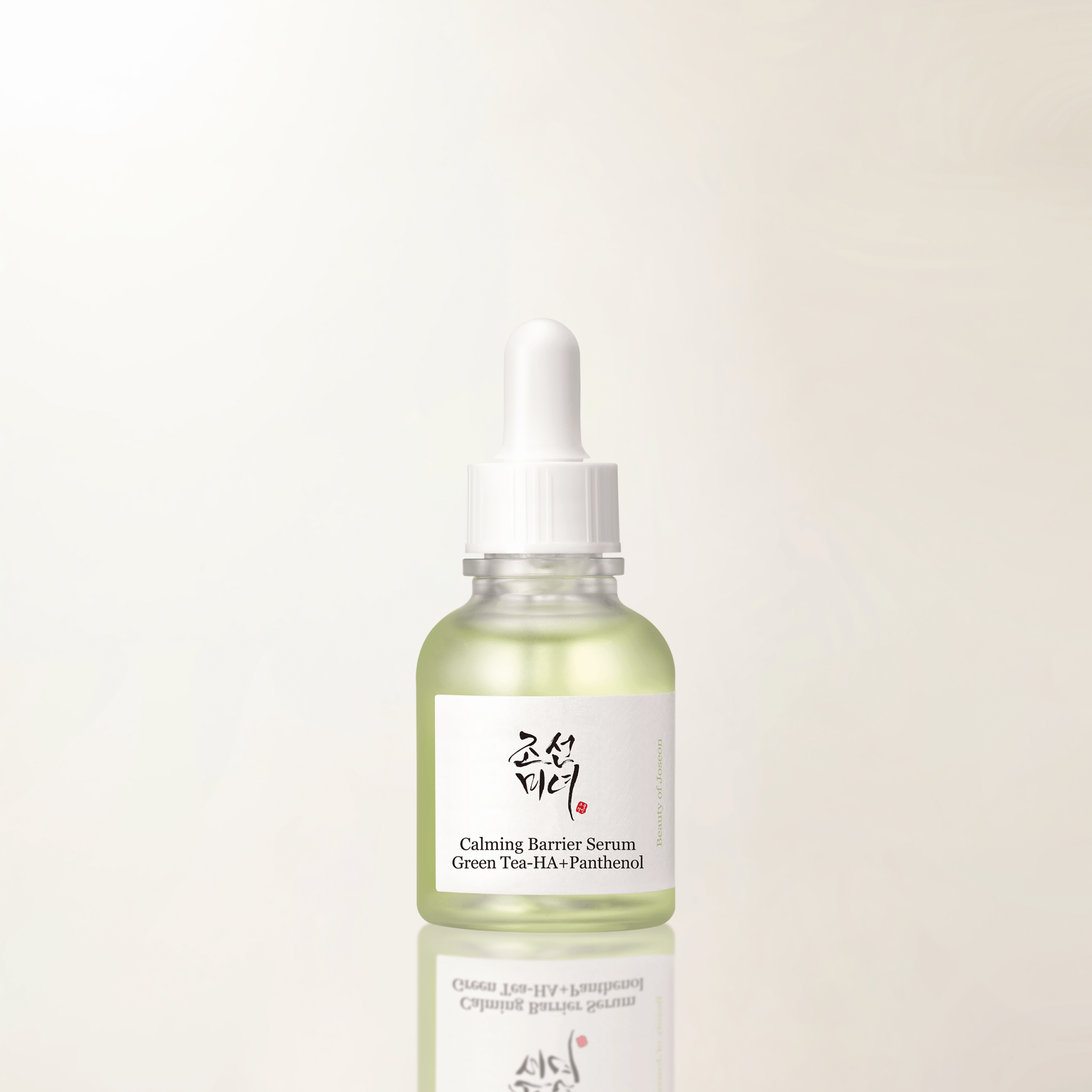

The best Beauty of Joseon routine for sensitive skin is short and introduced slowly: a gentle cleanser, the Calming Barrier Serum, a moisturizer your skin tolerates, and Relief Sun in the morning. Add new products one at a time, at least a week apart, and patch test each one. Exfoliants and retinoids come last, if at all.
What “sensitive skin” can mean
Sensitive skin is not one condition. It can mean skin that stings easily, gets red quickly, feels tight after cleansing, or reacts to fragrance or certain ingredients. It can also be a sign of conditions like rosacea, eczema or contact dermatitis, which need medical diagnosis. If your symptoms are persistent or severe, see a doctor or dermatologist.
The core sensitive-skin routine
Morning
- Rinse with lukewarm water. No cleanser needed for many sensitive-skin users.
- Calming Barrier Serum: two or three drops of Calming Barrier Serum.
- Moisturize: a simple moisturizer you know you tolerate, or Dynasty Cream for dry skin, Red Bean Water Gel for oily skin.
- Sunscreen: Relief Sun, applied gently with patting motions.
Evening
- Cleanse: Radiance Cleansing Balm if you wore sunscreen, then a short wash with the Green Plum Refreshing Cleanser, or just the gel cleanser if you wore none.
- Calming Barrier Serum.
- Moisturize.
How to introduce products safely
| Week | Action |
|---|---|
| 1 | Start with cleanser and moisturizer only |
| 2 | Add sunscreen |
| 3 | Patch test the Calming Barrier Serum, then add it |
| 5 or later | Consider one extra product, if needed |
Follow our patch test guide for every new product.
Gentle habits that matter as much as products
- Lukewarm water only. Hot water can trigger redness.
- Pat, do not rub. Pressing products in reduces friction.
- Soft towel, and pat dry.
- Fewer products. Every added product is another variable.
- Protect from wind and cold. In Canadian winters, a scarf over your cheeks helps.
What to approach with caution
- Exfoliants: if used at all, the Apricot Blossom Peeling Gel every one to two weeks, after your skin has been calm for a while.
- Retinoids: the Revive Eye Serum contains retinal; start very slowly, or skip it.
- Vitamin C: some sensitive-skin users find vitamin C tingly; if you try Light On Serum, start every other day.
- Propolis: the Glow Serum contains propolis, a bee product; skip it if you have bee-product allergies.
Sunscreen tips for sensitive skin
- Apply moisturizer first and let it settle before sunscreen.
- If sunscreen stings your eyes, keep it slightly away from the eye area and use a hat and sunglasses.
- Remove sunscreen gently at night with a balm rather than scrubbing.
For more about the formula, read our Relief Sun review.
Redness-prone skin
Triggers vary, but common ones include heat, spicy food, alcohol, sun exposure, wind, and hot showers. Keeping a short diary of flare-ups and possible triggers can help you and your doctor. A calming serum can support comfort, but persistent redness, visible blood vessels or bumps may indicate rosacea, which a doctor can treat.
What to do during a flare-up
- Stop all actives and new products.
- Switch to water rinse, Calming Barrier Serum, simple moisturizer and sunscreen.
- Avoid makeup if possible, or keep it minimal.
- If the flare-up is severe, painful, spreading or does not improve in a few days, see a doctor.
Sensitive skin and seasons in Canada
- Winter: richer moisturizer, humidifier at home, protect cheeks from wind.
- Summer: lighter moisturizer, shade and hats, and reapply sunscreen gently.
Reading labels with sensitive skin in mind
When you shop, the full ingredient list is your best tool. A few practical habits:
- Shorter is often easier. Fewer ingredients mean fewer potential triggers, although a short list is not a guarantee.
- Know your personal triggers. If you have reacted before, note the products and compare their ingredient lists to spot common ingredients.
- Check for fragrance and essential oils if you know they bother you.
- Be cautious with bee products such as propolis or honey if you have bee-related allergies.
- Remember that “natural” does not mean gentle. Plant extracts can also cause reactions in some people.
If you suspect an allergy, a doctor or dermatologist can arrange patch testing in a clinic, which can identify specific allergens more reliably than home testing. This can save you from a lot of trial and error.
Where to buy in Canada
Start with our product pages for Calming Barrier Serum, Relief Sun and Radiance Cleansing Balm, each with details and current Canadian buying options. For a review of the serum, see our Calming Barrier Serum review.
FAQ
Which Beauty of Joseon product is best for sensitive skin?
The Calming Barrier Serum is designed around soothing ingredients and is a natural starting point. Always patch test.
Can sensitive skin use Relief Sun?
Many sensitive-skin users like it, but reactions are individual. Patch test on the jawline first.
Should sensitive skin double cleanse?
Only when wearing sunscreen or makeup, and gently. A balm first and a short, mild second cleanse keep friction low.
When should I see a dermatologist?
If redness, burning, itching or bumps persist, worsen or affect your daily life, a dermatologist can diagnose and treat the cause.